Responsible Gaming and Its Role in Building Player Experience

In recent years, regulated gambling operators have increasingly recognized that rigid templates and slow vendor roadmaps are costing them their most valuable players. When player protection features feel like an annoying regulatory wall, user engagement drops and churn worsens.
At CrustLab, our background in iGaming development has shown us that responsible gaming and an exceptional user experience are mutually reinforcing. A shift from reactive restrictions to proactive designs will help you turn mandatory compliance into a powerful, loyalty-building differentiator. This article explores how you can leverage a custom frontend architecture to protect your audience and comply with regulations without sacrificing player lifetime value.
- Responsible gaming has evolved from a compliance requirement into a core part of player experience, helping operators build trust, improve player protection, and support sustainable growth.
- Modern responsible gambling frameworks combine education, technology, behavioral monitoring, and tools such as deposit limits and self-exclusion to reduce gambling-related harm.
- AI, behavioral analytics, adaptive friction, and frictionless compliance are helping operators identify risk earlier and deliver more personalized player protection without disrupting the user experience.
- Collaboration among operators, regulators, researchers, and support organizations continues to strengthen responsible gaming practices and shape the future of safe gambling.
Responsible Gaming and Modern Player Experience
Responsible gaming is no longer viewed as a standalone compliance requirement. The gambling industry has evolved toward a more balanced approach that treats responsible gaming and player experience as complementary goals. Rather than limiting entertainment, responsible gambling practices help create safer, more transparent, more sustainable, and more enjoyable gambling environments where players can stay in control of their own play.
Modern operators increasingly recognize that player protection supports long-term engagement, trust, and customer loyalty. This has led to the rise of what many experts call harmonious friction, i.e., carefully designed interventions that help players make informed decisions without unnecessarily disrupting the gaming experience. Examples include timely spending reminders, personalized account controls, and clear access to responsible gambling resources.
As KYC and AML regulations in online gambling continue to mature, responsible gaming has also become a competitive advantage in regulated markets. Operators that successfully balance compliance, player wellbeing, and seamless user experiences are often better positioned to build trust and strengthen their brands.
What Responsible Gaming Means in Today’s Gambling Industry
The modern definition of responsible gaming has evolved far beyond basic consumer protection rules or simple legal checklists. In today’s igaming industry, it represents a comprehensive framework that combines player education, advanced technology, continuous behavioral monitoring, strict regulation, and active player empowerment. The primary goal is to ensure that participating in online betting remains a safe, controlled, and sustainable form of entertainment.
While traditional systems relied heavily on manual self-exclusion or basic deposit limits after a problem emerges, today’s approach focuses on proactive risk prevention. Modern platforms use sophisticated data filters to analyze player actions in real time, enabling operators to offer personalized support tailored to individual habits.
Responsible Gaming vs Problem Gambling: Understanding the Difference
Responsible gaming and problem gambling are related but not the same thing. Responsible gaming focuses on prevention, awareness, and giving players control of their gambling activities. Problem gambling, on the other hand, refers to behaviors that cause financial, emotional, or social harm and may require treatment or professional support.
It’s also important to understand that gambling risk exists on a spectrum. Many people gamble for entertainment without experiencing harm, while others may gradually develop risky habits that can lead to a gambling problem or gambling addiction. Early recognition of warning signs allows operators and players to address problem gambling before it becomes more serious.
| Responsible Gaming | Problem Gambling |
| Prevents and raises awareness about gambling-related harm | Refers to harmful gambling behavior |
| Encourages informed decision-making | Often involves loss of control |
| Uses tools like deposit limits and self-exclusion | May require intervention or treatment |
| Supports safer gambling habits | Can lead to financial, emotional, and social harm |
| Protects players before issues occur | Occurs when gambling starts negatively affecting life |
Why Responsible Gaming Matters for Players and Operators
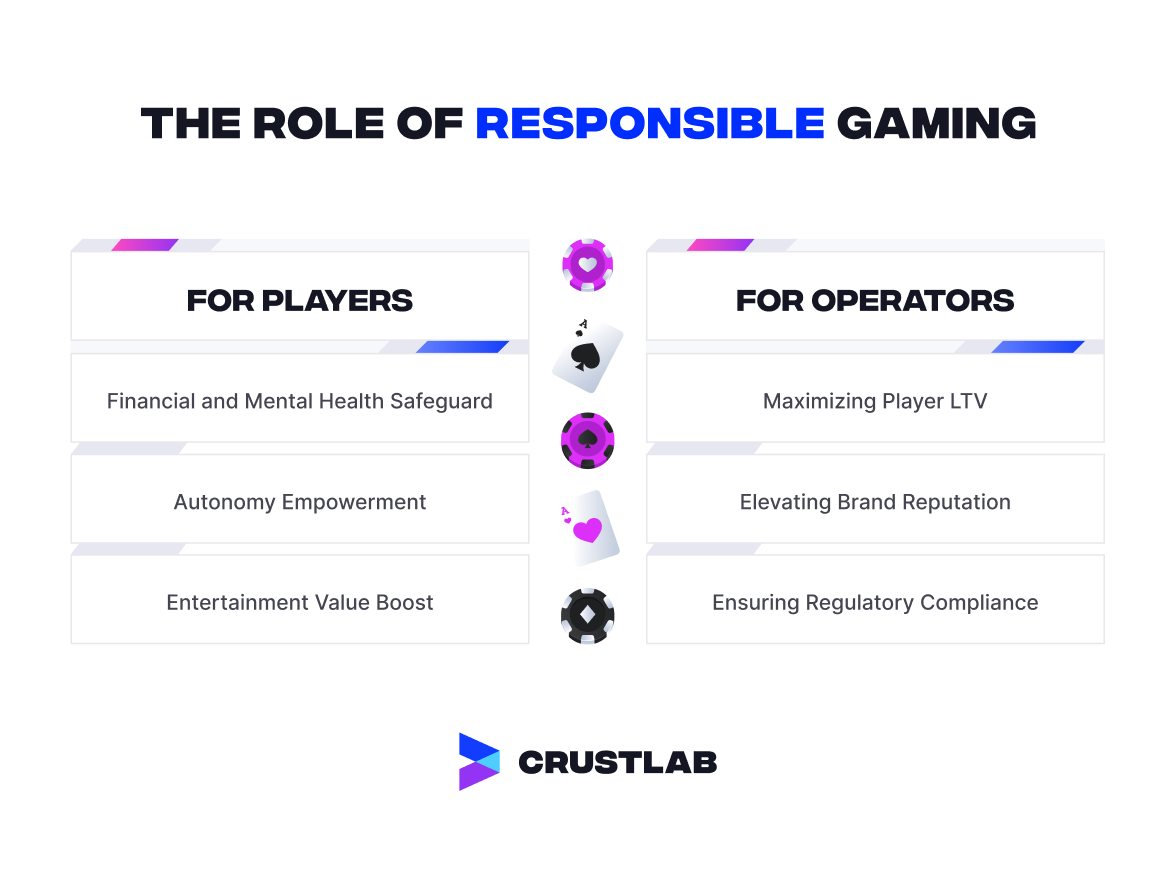
Responsible gambling practices are a shared responsibility that delivers immense value to everyone involved in the industry ecosystem, including players, regulators, and industry stakeholders. Far from being a mere operational hurdle, a proactive approach to safety directly secures long-term business sustainability while elevating player protection.
For Players:
- Safeguards financial and mental health: By protecting users from risking essential money, responsible gaming reduces the potential for gambling-related harm.
- Empowers autonomy: Responsible gaming resources and tools provide players with the clarity needed to stay in control of their play.
- Preserves entertainment value: Ensures that casino and sports betting remain a sustainable, fun pastime rather than an impulsive necessity.
For Operators:
- Maximizes Player Lifetime Value (LTV): Preventing problem gambling protects your most valuable customers from burning out and establishes a long-term revenue stream.
- Strengthens brand reputation: Demonstrating a genuine commitment to consumer care builds deep customer trust and drives organic retention.
- Ensures smooth regulatory compliance: Proactive safety protocols eliminate the risk of massive compliance fines or devastating license revocations.
Responsible Gaming UX: Balancing Protection and Friction
Historically, many responsible gaming measures were treated as separate compliance requirements added on top of the player experience. While these controls helped protect players, they often introduced friction that interrupted the gambling journey and created tension between conversion goals and player protection.
Modern sportsbook UX resolves this conflict by replacing disruptive roadblocks with “harmonious friction.” Instead of stopping a session completely, thoughtful design builds safety directly into the interface. For example, a sports betting app might display time limits or clean net-position trackers directly on the wagering screen.
When you treat compliance as a core part of product design rather than an afterthought, you guide your audience safely without hurting engagement. Intuitive, visually natural tools also enable you to meet strict regulatory standards while maintaining a smooth entertainment experience.
Key Principles of Responsible Gaming
Modern responsible gaming frameworks are built around several core principles that help protect players while preserving their freedom to make informed choices. These principles guide both regulatory policies and product design decisions across the gambling industry.
- Informed choice: Players should have clear information about odds, risks, rules, and wagering requirements.
- Transparency: Operators should openly communicate terms, promotions, and player protection measures.
- Player autonomy: Individuals should have access to tools that help them control their own play and spending.
- Harm minimization: Systems should be designed to reduce gambling-related harm and identify risk earlier.
- Fairness: Games, promotions, and processes should operate under clear, consistent rules.
- Accountability: Operators must take responsibility for compliance, player protection, and ethical practices.
- Ethical design: Products should encourage healthy decision-making without exploiting vulnerable users.
Common Risk Factors and Signs of Problem Gambling
Problem gambling often develops gradually, making early awareness especially important. Recognizing warning signs can help players seek support sooner and allow operators to provide appropriate assistance before harmful behaviors become entrenched.
Common signs of problem gambling include:
- Chasing losses by increasing bets after losing money
- Spending more time or money on gambling than intended
- Increasing wager sizes to achieve the same level of excitement
- Hiding gambling activities from family or friends
- Experiencing financial distress due to gambling
- Becoming emotionally dependent on gambling outcomes
- Neglecting work, relationships, or personal responsibilities
Additionally, certain risk factors make specific people more susceptible to harm. Underlying mental health challenges, sudden financial stress, or a natural tendency toward impulsive behavior all increase user vulnerability. By training customer-facing teams and configuring real-time data filters to flag behavioral changes, operators can intervene early to protect their users and ensure compliance.
Responsible Gaming Tools and Player Protection Features
To give players active control, gambling operators integrate an array of responsible gambling resources directly into the user interface. However, these tools are most effective when they are easy to find and use. Rather than hiding them within account settings, many operators now integrate responsible gambling features directly into the player journey. This approach encourages players to interact more with the tools and make more informed decisions while they play.
Here are some tools operators utilize to help users manage their behavior:
- Deposit limits: Allow players to restrict the amount of personal money they can deposit into their account over a daily, weekly, or monthly period.
- Wagering and loss limits: Set a clear ceiling on the total amount a user can bet or lose during a specific timeframe, preventing impulsive loss-chasing.
- Time limits and session reminders: Provide automated reality checks that notify players how long they have been active, prompting them to evaluate their session duration.
Self-Exclusion Systems and How They Work
Self-exclusion is an effective responsible gaming tool available to players experiencing difficulty controlling their gambling. It allows individuals to voluntarily block access to their accounts for a specified period or permanently if needed.
Most operators offer both temporary and long-term self-exclusion options. In many regulated markets, self-exclusion programs extend across multiple operators to stop self-excluded individuals from simply opening new accounts elsewhere. These systems help protect vulnerable players and provide time to seek support or treatment when necessary.
While self-exclusion is not a cure for gambling addiction, it remains an important safeguard for individuals at higher risk of harm.
Time-Outs, Cooling-Off Periods, and Account Controls
Time-outs and cooling-off periods give players a way to temporarily step away from gambling without activating full self-exclusion. While self-exclusion is typically used for longer-term protection, these shorter breaks are designed to help players regain control during periods of increased risk or emotional decision-making.
A time-out may last anywhere from a few hours to several weeks, depending on the operator and local regulations. During this period, players cannot access certain gambling activities, deposit funds, or place wagers. Combined with account controls such as spending reviews and limit-setting tools, these features encourage greater self-awareness and support healthier gambling habits.
For many players, a short pause can provide enough time to reflect on their behavior, reduce impulsive play, and make more informed decisions when they return.
Responsible Gaming in Sports Betting
Sports betting presents unique responsible gaming challenges due to its fast pace, emotional nature, and constant accessibility through mobile devices. Live betting, in particular, encourages rapid decision-making, making it easier for players to lose track of time and spending.
To support safer gambling, many operators offer tools such as stake limits, deposit limits, session reminders, and affordability assessments. These measures help players maintain control over their betting activity while reducing the likelihood of gambling-related harm.
Since sports fans often have strong emotional connections to teams and events, decision-making can sometimes be influenced by excitement, frustration, or loyalty rather than objective analysis. As a result, responsible gaming has become an essential part of modern sports betting software development, helping operators balance player protection with an engaging betting experience.
Responsible Gaming in Online Casinos and iGaming Platforms
Online casino environments introduce unique risk factors as many games are designed for continuous play and offer instant results. Features such as fast game rounds, immersive environments, and easy account access can increase the risk of excessive gambling if appropriate safeguards are not in place.
To maintain a healthy platform, operators use tools such as deposit limits, session reminders, and behavioral monitoring systems. They also promote transparency through RTP disclosures and certified RNG systems that ensure games operate fairly. Specialized casino software development increasingly incorporates responsible design principles that support both entertainment and player protection.
Several operators are also adopting micro-interventions, i.e., small, timely prompts that encourage players to review their activity or take breaks. These subtle interventions help raise awareness and support healthier play without creating unnecessary friction in the gaming experience.
The Role of Technology and AI in Responsible Gaming
Technology is revolutionizing how operators identify and respond to gambling-related risk. Instead of relying solely on players to seek help, advanced responsible gaming systems use AI, machine learning, and behavioral analytics to detect unusual patterns that may indicate a gambling problem.
These systems can analyze factors such as spending habits, wagering frequency, session duration, and changes in player behavior in real time. When elevated risk is detected, operators can provide personalized support, targeted reminders, or additional account controls before harmful patterns become more serious.
By enabling earlier and more accurate interventions, AI helps operators move from reactive responses to proactive player protection. As explored in this guide to AI in casinos, technology is making responsible gambling more effective while helping operators deliver more personalized gaming experiences.
From Traditional Controls to Adaptive Friction
Traditional player safety frameworks rely on generic rules that treat all users exactly the same. Under these outdated setups, every account receives identical warnings or sudden deposit blocks, regardless of their actual behavior. For operators tied to rigid third-party platforms, these clumsy interventions often frustrate low-risk recreational users and drive them straight to smoother competitors.
Adaptive friction takes a more personalized approach. Using real-time behavioral analysis, operators can adjust interventions based on a player’s activity, spending patterns, and potential risk indicators. For example, a player showing signs of increased risk might receive spending reviews, while lower-risk users experience fewer interruptions.
This approach helps operators protect players more effectively without creating unnecessary friction. Ultimately, adaptive friction supports better player outcomes by tailoring interventions to individual circumstances.
Financial Responsibility and Gambling Budgeting
Financial responsibility is a key part of responsible gaming. Players should view gambling as a form of entertainment rather than a way to generate income, and only use money they can afford to lose.
Effective bankroll management starts with setting clear spending limits before playing. This may include deposit limits, wagering limits, and personal budgets that help players control how much money and time they spend on gambling. Regularly reviewing account activity can also help players stay aware of their spending habits.
Smart operators now use affordability assessments and financial risk monitoring to identify signs of potential harm earlier. Combined with responsible gambling tools and player education, these measures help support safer gambling while reducing the risk of financial distress and loss of control.
Frictionless Compliance, KYC, and Open Banking Verification
Identity and financial verification are often the most frustrating touchpoints in the entire player journey. Traditional Know Your Customer (KYC) and Anti-Money Laundering (AML) checks often require users to upload physical documents and wait hours for manual approval. When compliance feels like a roadblock, players quickly abandon the signup process for platforms that offer instant access.
Modern platforms solve this friction by shifting verification into the background using automation and Open Banking protocols. By integrating advanced API layers, operators can verify a player’s identity, age, and location instantly during registration without requiring manual document uploads. When deeper affordability or source-of-funds checks are legally mandated, Open Banking allows players to securely authorize an instant, encrypted digital check through their own bank app. This process securely shares necessary financial health indicators with the operator in seconds, keeping sensitive banking details private.
Transitioning from clunky upload portals to automated, data-driven verification transforms compliance from an acquisition hurdle into a competitive advantage. It keeps the onboarding process fast and welcoming for legitimate recreational players while providing compliance teams with highly accurate, real-time risk data to stop financial crime instantly.
Regulation and Legal Framework for Responsible Gaming
Responsible gaming is supported by a growing network of laws and regulations designed to protect players. Regulators increasingly expect operators to move beyond basic compliance and demonstrate proactive approaches to player protection.
These requirements may include affordability checks, responsible advertising standards, self-exclusion programs, employee training, and ongoing monitoring of player behavior. However, regulations vary across jurisdictions, meaning operators must adapt their products and compliance strategies to meet local expectations.
Responsible gaming will remain a central part of regulatory oversight. Hence, operators seeking to enter or expand into regulated markets should understand the requirements of different licensing authorities and top gambling licenses.
Industry Responsibility and Operator Accountability
Responsible gaming requires commitment from every part of an organization. While compliance teams play a critical role, effective player protection also depends on collaboration between product teams, UX designers, data analysts, customer support staff, and senior leadership.
Many operators now embed responsible gambling practices into their policies, casino employee training programs, and product development processes. This helps ensure that player protection is considered throughout the customer journey rather than treated as a separate compliance task.
Beyond meeting regulatory requirements, strong accountability helps operators protect their reputation and create safer gambling environments. The best operators view player protection as both a business responsibility and a competitive advantage.
Advertising Ethics and Responsible Marketing Practices
Responsible gaming extends beyond products and platforms to include how gambling services are marketed. Operators must ensure that advertising is transparent, accurate, and aligned with responsible gambling principles.
This means avoiding misleading claims, clearly communicating bonus terms, and ensuring promotions do not target vulnerable populations or encourage excessive gambling. Many regulations also place restrictions on how and where gambling advertising can appear, particularly when it comes to minors.
By adopting ethical advertising practices, operators can raise awareness about safer gambling while building trust with customers and regulators. Responsible marketing helps create a healthier gambling environment and supports long-term industry sustainability.
Youth Protection and Prevention of Underage Gambling
Preventing underage access is a non-negotiable standard for maintaining an ethical igaming platform. Traditional methods that rely on simple checkbox age gates are ineffective against tech-savvy minors, exposing operators to severe legal liabilities and immediate license revocation. Protecting youth requires a robust defense strategy that combines automated identity routing with strict ongoing monitoring to stop underage users at the digital front door.
By integrating automated KYC APIs during registration, operators can instantly cross-reference player information against official databases to verify age and identity in real time. This digital layer is reinforced by ongoing behavioral tracking and secure biometric or multi-factor authentication during logins to prevent minors from accessing adult accounts. Transitioning from passive warnings to a data-driven verification process allows operators to eliminate compliance gaps and protect vulnerable youth.
Support Systems and Help for Gambling Addiction
Even with advanced behavioral tracking and self-control tools, some players will still experience gambling-related harm and require specialized external care. Ethical platforms ensure that helplines, localized support networks, and professional counseling resources are prominently featured across the user interface.
Operators can seamlessly connect players to established global organizations such as GamCare, Gamblers Anonymous, and the National Council on Problem Gambling (NCPG). For platforms operating in newly regulating jurisdictions within the MENA region – most notably the UAE – this means offering localized Arabic-language resources and culturally aware counseling services alongside standard international hotlines.
Seeking help early can make a significant difference. The sooner people recognize harmful patterns and access treatment, the better their chances of regaining control and reducing the impact of gambling on their finances, relationships, and overall quality of life.
Education and Awareness in Responsible Gaming
Player safety relies heavily on continuous education and transparent awareness campaigns. Instead of burying safety warnings in dense terms and conditions, the best platforms integrate clear resources directly into the user experience. Operators can help users maintain realistic expectations and view betting strictly as entertainment by educating them on how odds actually work, debunking common gambling myths, and clearly defining the house edge.
This proactive approach uses localized, accessible content to teach players how to spot early signs of risky behavior in themselves. The availability of interactive self-assessment quizzes and simple educational guides right on the dashboard empowers individuals to monitor their own gaming habits.
Data Sharing and Industry Collaboration for Safer Gambling
True progress in player protection cannot happen in isolation. Responsible gaming is most effective when operators, regulators, researchers, and industry stakeholders work together. Collaboration allows organizations to share knowledge, identify emerging risks, and develop more effective strategies to reduce gambling-related harm.
Many regulated markets now use shared self-exclusion databases and cross-operator monitoring systems that help protect self-excluded individuals from accessing gambling services through multiple providers. Industry partnerships also support research, education, and the development of responsible gambling resources.
Research and Innovation in Responsible Gaming
The continuous advancement of player safety depends on ongoing research and innovation. Researchers, regulators, and operators are increasingly using behavioral science, data analytics, and technology to better understand gambling behavior and identify factors that contribute to harm.
Studies on gambling addiction, player decision-making, and risk patterns help inform more effective responsible gambling practices and player protection measures. At the same time, advances in machine learning and behavioral monitoring are enabling earlier interventions and more personalized support strategies.
This combination of research and technological development is helping the industry move toward evidence-based approaches that improve player outcomes while strengthening responsible gaming frameworks across regulated markets.
Future of Responsible Gaming and Emerging Trends
The future of responsible gaming will be shaped by advances in technology and evolving regulations. Operators are increasingly adopting AI-driven monitoring, adaptive friction, affordability assessments, and personalized interventions to identify risk earlier and provide more effective support.
Additionally, compliance processes are becoming more seamless through automated verification, open banking integrations, and continuous risk monitoring. These innovations help operators protect players without introducing unnecessary friction into the customer experience.
Looking ahead, responsible gaming will continue to evolve as a discipline that combines technology, ethics, compliance, and UX design. As highlighted in current igaming trends, the industry’s focus is shifting toward systems that balance player protection with smooth and sustainable gambling experiences.
Conclusion: Responsible Gaming as the Foundation of a Safe Player Experience
The evolution of responsible gaming from a rigid compliance checklist to a data-driven framework marks a definitive turning point for the igaming industry. True sustainability relies on abandoning reactive interventions in favor of adaptive friction, background verification, and predictive analytics. By embedding player safety directly into the platform’s DNA, from onboarding UX and marketing practices to real-time behavioral monitoring, operators shift from merely avoiding penalties to actively cultivating an ecosystem built on trust, transparency, and longevity.
Ultimately, a safe player experience is the foundation of profitability rather than its enemy. Protecting the user journey from financial distress and cognitive fatigue ensures a healthier, more loyal player base and shields operators from catastrophic regulatory risks. As the industry advances into an era of hyper-personalized safety tools and global regulatory shifts, the brands that champion proactive accountability will secure their market position and define the future of sustainable digital entertainment.