How to Start an Online Fish Table Business? Step-by-step Plan for 2026

The iGaming industry offers many potential opportunities for savvy entrepreneurs. One niche currently experiencing a popularity boom is the fish table business, which involves developing fish games and providing fish gambling tables for patrons.
Fish games were once a hit in land-based casinos and now offer great revenue potential for those in the iGaming development industry. In this article, we will walk you through all you need to know about how to start an online fish table business, with a detailed step-by-step guide that takes you from planning to launch.
- A fish table game is an innovative game where players shoot cannons at animated fish and other sea creatures to collect points and win prizes.
- A fish table game business can be highly profitable if executed correctly.
- Entrepreneurs looking to enter this iGaming niche can build a custom platform or buy a white-label solution.
- Setting up a sustainable fish table game business requires rigorous planning, compliance checks, and efficient marketing.
What Is an Online Fish Table Game and Why It’s Trending
A fish table game is a simple arcade-style shooting game. It simulates an underwater environment where players shoot cannons at various animated fish species and other sea creatures to collect points and earn a payout. Some of the most popular titles include Golden Dragon, Fire Kirin, and Tiny Fish.
Fish games are popular on online casinos and sweepstakes platforms, especially in the United States. The simplicity of this game and the engaging gameplay experience it offers are key to its popularity. Unlike slots and other luck-based casino games, strategy and precision matter in fish gaming more than pure luck. A typical fish game has multiple game levels that become more interesting as the player progresses.
Fishing games can be played for fun or to collect points on arcade game platforms. Some traditional gambling sites also offer real money fish games, allowing players to bet money and win payouts.
A fish table game business can be highly profitable, generating thousands in daily revenue if executed right. The huge market growth potential of this gaming niche explains why entrepreneurs are actively venturing into it.
Fish Table Game Development Features
For anyone looking to venture into the online fish table business, it is important to know the features to integrate to make your game more engaging. The most successful fish table businesses focus on delivering an exciting world of immersive experiences to keep players engaged. Some of the core features of this game include:
- Realistic graphics
- Smooth animations and responsive controls
- Multiplayer gameplay
- Weapon or cannon upgrades
- Power-ups
- Leaderboards
- Bonus systems
In addition to these player-facing features, your fish game also needs to integrate vital backend features like an admin dashboard from which you can manage players, analyze data, and user wallets. Real money fishing games also need secure payment integration with anti-fraud modules to protect players and preserve the integrity of the gaming platform.
Popular Variations of Fish Table Games
The online fish table game niche is a diverse genre that covers different, distinct themes and game mechanics. For instance, Golden Fish and Fire Kirin both have mythological themes with graphics influenced by Asian roots. King of Treasures, another popular fishing game title, has a treasure-hunting/pirate theme, while the Ocean King fishing game is a classic game focused on more traditional deep-sea adventure.
Aside from the standard fishing games, some variants explore unusual themes, such as space-themed titles featuring alien creatures instead of fish. Some games also feature colorful underwater kingdoms, mermaids, and magical creatures.
This diversity is an added benefit for operators looking to enter the industry. You can leverage the variations to diversify your portfolio and attract a broad player demographic. The diversity in this niche also makes it easier to introduce fresh content that helps you maintain user engagement.
Benefits of Fish Table Game Development
There are two main approaches to online fish table game development. You can either partner with a professional casino software development company to create a custom solution, or you can simply pay for a white-label solution that has everything your platform needs already.
The white-label solution is a simpler approach because it provides a ready-made platform with all the features and integrations your platform needs. However, investing in custom fish table game development has numerous benefits, too. Some advantages of custom fish table game development are listed below:
Full Control Over Branding and Monetization
With custom software development, the operator has full control over the game. They can design the user interface however they want, using the brand’s assets. The game’s match mechanics (RTP and Volatility) can also be tailored precisely to meet the operator’s monetization goals. Additionally, instead of sharing revenue with a white-label solutions provider, custom software allows you to retain full control over the total revenue earned.
Scalability of the Platform
One benefit of building software architecture from the ground up is that you get to plan for future scalability. The software can be built to handle projected future player load right from the onset. It’s also easier to start small and scale gradually as you get more players or expand into new markets at your own pace.
Enhanced Security
With a white-label solution, the responsibility of securing the platform is shared with (or even completely managed by) the platform provider. Building custom software gives you complete control over the software’s security. You get to implement your own security protocols and integrate fraud management tools.
Ability to Integrate New Features Over Time
A custom solution can grow and evolve over time without being tied to a rigid template. You also have the flexibility to integrate any third-party APIs or innovative technology you want to add new features to your game. This allows you to deliver a unique playing experience that sets your platform apart from competitors.
Flexibility for Localization and Compliance Adaptation
Building custom fishing table software gives you control over localization features such as language, currency, and even your game theme. This allows you to build a platform fully tailored to the unique needs and preferences of your target audience. This approach also allows you to integrate features that meet the specific legal and regulatory compliance requirements of the jurisdiction where you operate.
Understanding the Online Fish Table Business Model
Part of the appeal of running an online fish table business is that you can structure your business in different ways depending on your audience and legal compliance requirements in your target jurisdiction. Here are the main ways an online fish table operation can be structured.
Real-Money Fish Table Games
Real money casino sites can offer fishing games for players interested in winning actual cash. With this model, players deposit real cash into the casino site and win cash prizes as they play the game. The operator earns money through player losses, which is determined by the game’s house edge. Since it is considered a gambling business, a real money model is subject to strict regulatory requirements. In most jurisdictions, operators need to obtain a gambling license to run this model.
Sweepstakes-Based Platforms
With this model, the platform runs as a sweepstakes or promotional mode. Sweepstakes sites allow players to access games for fun without spending actual money. The site gives them free gold coins, which they can spend on games. However, the operator can also make money through the sale of optional premium coins (sweeps coins). Players can win more sweeps coins by wagering with premium coins that they buy, and the coins can be redeemed for real-world prizes. This business model operates under promotional laws in most jurisdictions. This allows them to run normally, with minimal regulatory restrictions.
Social/Virtual Currency Model
Social casinos are similar to sweepstakes sites because they use virtual tokens as well. However, social casinos have no premium tokens, which means players don’t get to win real prizes. The emphasis is on the social gaming experience, so the site prioritizes features like in-game chats, leaderboards, multiplayer modes, and so on. Social casinos mainly make money through in-app purchases (IAP). They sell virtual currency, cosmetic items, power-ups, and energy/time-limit removal. This model is the least restrictive in terms of regulation.
Step 1: Conduct Market Research and Define Your Audience
Before you launch your online fish table game business, you should understand the peculiarities of your audience and the unique conditions in the market you intend to operate in. Due diligence will help you position your platform to take full advantage of all available opportunities and edge out the competition. Some of the things to do during market research include:
- Assessing competitors: In the first stage of your market research, study the top-performing fish table game companies to see what sets them apart. This will also help you figure out the best monetization strategies to reach a wider audience.
- Understanding player demographics: Your market research should look into the behavior and preferences of your target audience. This helps you identify how to tailor your platform and marketing efforts to meet their needs. For instance, you can figure out which features drive engagement and immersive gameplay most effectively.
- Researching local laws: Learn all you can about the regulatory conditions in your target location. This is particularly important if your business will be operated as a real-money gambling platform.
- Identifying gaps or differentiators: Conduct market research to check market trends, competitors, and player preferences so you can identify gaps yet to be filled by existing online gaming platforms. Proper keyword research and social listening can help you validate demand for specific features, so your platform stands out.
Legal Requirements and Licensing Considerations in the U.S
In the United States, virtual fish game businesses operate under different laws depending on the jurisdiction. The Sweepstakes model has proven particularly popular in most cities. This is partly due to the game’s high engagement level, but also because it allows operators to bypass complex gambling regulations in most markets across the country.
According to the law in most US states, games that do not require players to make purchases or deposit compulsory funds are not classified as gambling games. This is what the dual currency system of sweepstakes casinos helps them achieve. Players can play for as long as they want using free gold coins, and they only buy premium sweeps coins if they want to.
To operate legally as a sweepstakes casino, your fish game platform must clearly indicate the “No Purchase Necessary” requirement on its terms of service page and in the sweepstakes rules. Despite their legal status, sweepstakes casinos are still expected to follow general regulatory requirements regarding user privacy, KYC, anti-money laundering laws, and age verification.
Step 2: Choose the Right Business Model and Revenue Strategy
Next, you need to determine how your fish table business will make money by working out the ideal model and monetization strategy. The business model you choose should depend on the outcome of your target audience research. Select a model that is likely to drive the highest engagement while meeting your revenue expectations. Aside from making money directly from real money bets, here are some other popular monetization strategies you can consider:
- Freemium Model: This model allows users to register for free but locks certain features behind a paywall. The freemium model enables you to sign up several users on a free plan, with the possibility of upselling a premium plan if they enjoy the experience.
- Sweepstakes Model: In the sweepstakes model, players get the option of playing for free with free coins. However, they can also purchase premium coins for the opportunity to win real-world prizes.
- Subscription Model: A subscription plan requires all players to pay a token for access to your gaming platform. This approach makes sense from a cash flow point of view, as it is easier to estimate and plan based on your monthly revenue.
- Advertisement-based Model: The advertising model allows users to play for free, but they must view ads to use the platform. You may also charge players for an ad-free experience.
- In-game Purchases: This strategy involves offering users certain perks that can boost the player experience for a fee. Users can pay for weapons, level-ups, extra playing time, and other game features.
After settling on a business structure, you can start working on plans to incorporate a limited liability company or sole proprietorship in line with the law in your target market.
Step 3: Create a Business Plan, Calculate Startup Costs, and Budget Planning
This is the phase where you put everything you have learned so far together to create a comprehensive fish table business plan. This document should detail all the important information about your business and your plans going forward. It should include your business objectives, target market, pricing strategy, and marketing plans. This will serve as a road map for your company.
More importantly, your business plan should include your financial plan for the business. It should highlight typical budget items, revenue projections, and how you intend to raise funds. Some of the typical expenses you’ll incur in launching an online fish table business include:
- Software development cost
- Licensing fees
- Hosting
- Compliance costs
- Payment gateway setup
- Marketing
- Customer support
It’s hard to say exactly what the total budget for this project will be, but you can expect to spend between $40,000 and $100,000 to set up an online fish table game. The exact cost depends on the complexity of the project and your target jurisdiction.
To minimize risk, it is recommended that you test the waters by building a minimum viable product and see how the market responds. Over time, you can implement a phased rollout and refine your platform as you go along.
Step 4: Choose Software or a White-label Provider
This is the phase where you determine who your software development partner for this project will be. The software is the heart of your fish table business, so your choice here matters. The simplest option is to buy a white-label or turnkey solution. This gives you a ready-made (possibly pre-licensed) platform that you simply customize to meet your needs. You also won’t have to manage the infrastructure on your own.
This is a great option for people who prioritize speed and convenience. But if you want a platform that’s scalable, tailored to your needs, and packed with engaging features, the best option is to opt for custom platform development. This allows you to integrate core platform features like multi-player lobbies, power-ups, bonus systems, analytics dashboard, Admin CMS, and payment wallet.
If you’re opting for custom development, your choice of development partner can make or break your platform. Here are some factors to consider to help you choose the best casino software providers:
- Consider the SLA
- Check the developer’s portfolio
- Check uptime records
- Scalability
- Compliance support
Step 5: Build or Integrate Core Platform Features
The software provider supplies the game itself, but you also need to create the gaming platform and integrate its core features. This is the next step in setting up your fish gaming table. How you execute this phase depends on whether you’re building a website or a mobile app. For a mobile app, you also need to decide if you are building a native app for Android and iOS devices or a single hybrid app with cross-platform compatibility.
You need to set up a front-end for your gaming platform, as well as the backend server and admin dashboard. The development phase is also where you’ll integrate external services like the game client and set up the hosting infrastructure. A standard fish table gaming platform should be secure with standard encryption protocols, DDoS protection, and WAF.
Step 6: Set Up Payments, KYC, and Risk Management
With your fish table game fully set up, the next step is to configure the payment system. Your approach depends on your monetization strategy. Ideally, it is recommended that you set up multiple payment methods for your platform. The best platforms allow users to pay with cards, ACH deposits, e-wallets, and even cryptocurrencies.
Your gateway integration should be implemented in line with standard encryption and player protection standards. To protect players and prevent fraud, your platform should also have measures in place to ensure all players follow KYC and anti-money laundering procedures.
Adequate player verification improves compliance while also boosting player trust in your platform. Businesses in the gaming niche also need to safeguard themselves against common payment risks like chargebacks, fraudulent transactions, and identity theft.
Step 7: Create Legal Policies and Responsible Play Framework
In line with compliance requirements and to ensure your players have all the information they need about your legal policies, you need to create and customize vital legal documents. Your fishing game platform should include legal documents like your Terms of Service, privacy policy, and responsible play guidelines.
Create and review these documents with the help of your legal team and include them on your website before it goes live. Gaming platform operators are also expected to implement player protection features such as spending limits and session time alerts. You should also provide players with self-exclusion options and links to help them get assistance if they struggle with problem gambling.
Step 8: Design User Experience and Game Content
This step is concerned with the physical appearance and the overall gaming experience of your online fish table business. After integrating your games, create an interactive design for the game lobby, which is where the games will be displayed.
To make it easier for users to navigate your platform, you should also create onboarding screens and user flows. These serve as references so users can easily find their way around the platform and maximize its features.
In addition to the game itself, creating gamification strategies can make your platform a lot more engaging for users. Consider introducing features like reward loops, bonus rounds, leaderboards, and interactive audio feedback to boost retention and overall satisfaction.
Step 9: Test the Platform and Prepare for Launch
Now that your fish table game is ready, one last thing to do before launching is to rigorously test the platform. This should be done before the official release to ensure there are no bugs or security vulnerabilities in the gaming platform you have built. The most important tests to carry out before launching your gaming platform include:
- Performance testing
- Load testing
- Payment flow verification
- Bug fixing
- Security audits
After carrying out these tests internally, you can also run a beta test or soft launch your gaming platform to a small subset of your users. This allows you to gather feedback and optimize the platform before scaling to the general public.
Step 10: Launch, Analyze, and Optimize
This is the stage where everything comes together. The launch phase is where you release your online fish table game to the public. Note that deployment isn’t just about going live. You have to implement a structured marketing plan to ensure that your app reaches the right people and maintains long-term success.
After a successful launch, it’s time to start collecting data and analyzing it to continuously improve your online fish table business. Metrics like retention rates, churn, daily active users, and average revenue per user give you an idea of how well your app is doing. You can integrate BI dashboards or analytics tools to collect and analyze important data. Direct feedback through surveys and A/B tests can also help you get insights into how you can update your game catalog or offer new promotions to attract users.
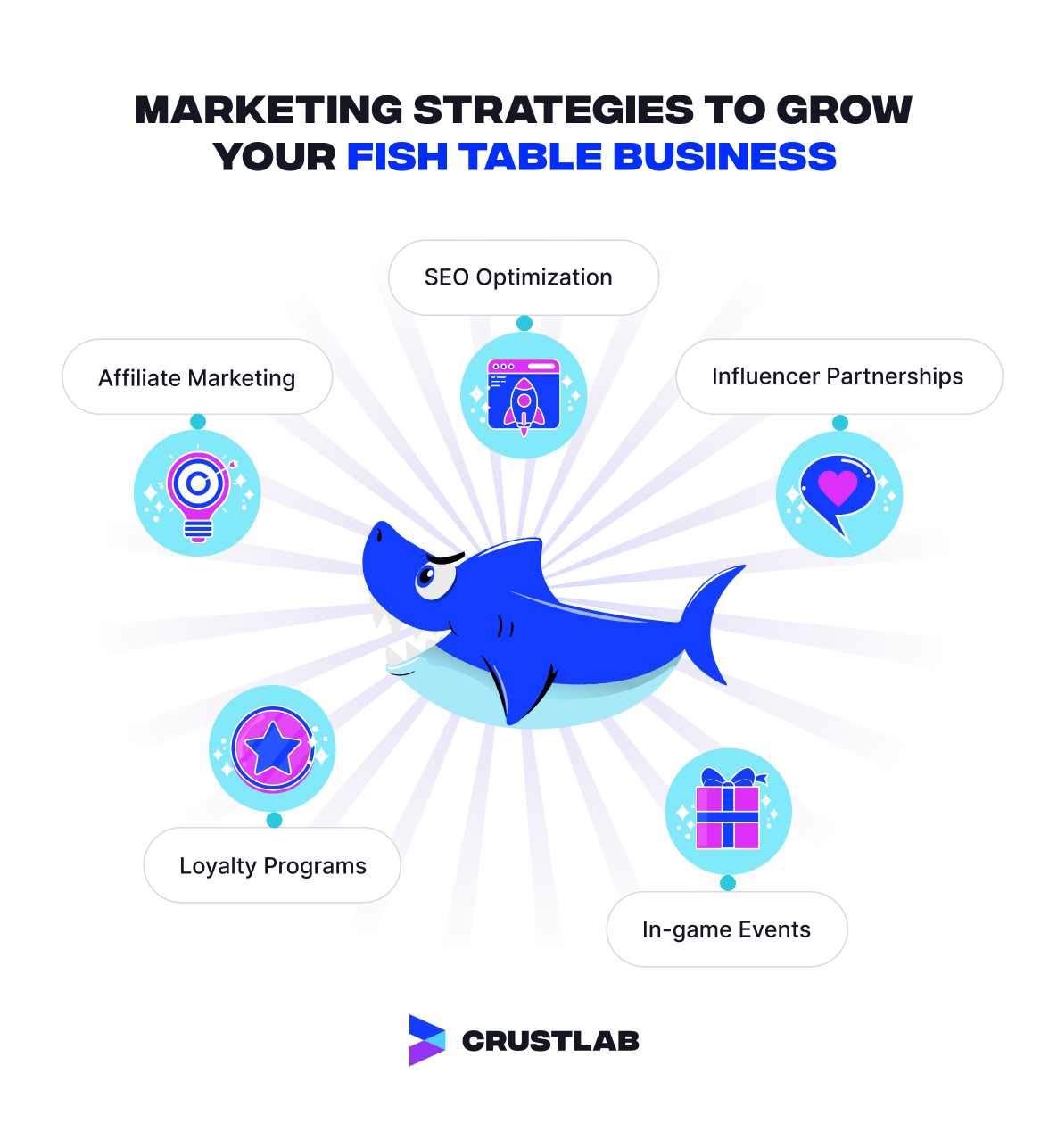
Marketing Strategies to Grow Your Fish Table Business
The iGaming industry is highly competitive. Your fish table business is competing with several other fish tables and gaming platform operators in different niches. This is why it isn’t enough to launch a platform. You have to leverage smart marketing strategies to attract and retain players. Some of the most common tactics to use include:
- SEO Optimization: Search Engine Optimization boosts your online platform’s ranking on search engines. This is achieved by targeting keywords users typically use in search, like “fish table game online,” developing content with relevant keywords, and following SEO principles in building and optimizing your site. This is an effective strategy that can boost organic discovery of your platform.
- Affiliate Marketing: Affiliate marketing is one of the most common marketing strategies in the iGaming industry. This strategy involves partnering with third-party websites (affiliates) to direct traffic to your platform in exchange for a commission.
- Influencer Partnerships: Where permitted by law, you can leverage partnerships with celebrities and influencers to promote your platform to their fans and followers. Using a familiar face to market your business is an effective way to build trust and authenticity with your target audience.
- Loyalty Programs: After acquiring players, the next goal is to keep them engaged. The goal is to balance acquisition cost with retention and lifetime value. This is achieved by making your platform engaging and offering incentives to reward users who actively use your platform. You can set up a tiered VIP or loyalty program with unique rewards for users at different levels.
- In-game Events: Consider organizing in-game events like tournaments, daily missions, or time-limited bosses (a Super-Rare Fish or a new seasonal boss). This can drive engagement and create urgency to keep playing due to the fear of missing out (FOMO).
Measuring Success: KPIs and Analytics You Should Track
One of the most important things to do post-launch is to monitor the health and profitability of your fish table business. This is achieved by tracking key metrics related to the growth of the business and how much revenue you’re bringing in. The most important metrics to track include:
- Daily/weekly/monthly active users
- Conversion rate
- Average revenue per user (ARPU/ARPDAU)
- Churn rate
- Lifetime value (LTV)
- Return on Ad Spend (ROAS)
The real value of the data you collect isn’t in the numbers themselves, but in how you segment, analyze, and apply them to your product optimization and marketing decisions. The key is to know what area of your business operation a metric applies to and to interpret what the data is saying in that light.
Operations, Support, and Continuous Compliance
After launching your online fish game business, you need to switch from development mode to long-term management mode. An online gaming business like this needs continuous oversight and efficient management to stay successful. The following are some of the things you need to continue doing after setting up your fish game business:
- Build a support team with multilingual support if you operate in international markets.
- Maintain 24/7 player assistance
- Review and update the platform periodically
- Carry out regular audits and stay compliant with evolving regulations
- Continuous risk assessment
- Vendor management
Challenges When Starting an Online Fish Game Table Business
A fish game table business is a potentially lucrative venture. But like every iGaming business, it comes with its own unique set of challenges. Navigating these challenges successfully will be the difference between survival and failure for your business. The following are some of the common mistakes new operators make in this niche:
- Neglecting compliance: The iGaming industry is highly regulated. Even if you’re running a sweepstakes model, there are still some rules everyone is expected to comply with. Learn the compliance requirements for your business model and adhere to them to avoid heavy fines or an outright ban.
- Underestimating marketing costs: Marketing campaigns are important in running an iGaming business. A good product without a solid marketing plan will struggle to get attention. You should have solid plans for marketing and raise the funds needed to execute them.
- Using unverified software providers: Your fish game table software is the backbone of your platform. Partnering with an unverified or unreliable software provider can be catastrophic to your platform. You should only partner with established and highly reliable providers with a proven track record.
- Failing to secure payment processes: iGaming businesses are prone to fraud and malicious attacks. You’ll lose money and trust if your payment process fails due to poor integration of payment gateways or weak fraud detection. Partner with specialized iGaming payment processors with integrated fraud detection tools, multi-layer authentication, and other risk management measures.
How Much Does It Cost To Develop a Fish Table Game?
As you can see from this comprehensive guide, setting up a fish game table business involves several steps that can go in different directions depending on the peculiarities of your project. This makes it difficult to say for sure how much the entire project will cost.
On average, you can expect to spend between $30,000 and $100,000 on this project, depending on the overall scope and complexity. Some of the factors that determine the actual cost of your project include:
- Quality of game design and graphics
- Complexity of the app flow and advanced features
- The platform you’re building for (Android, iOS, or web)
- Location of your development team
- Quality assurance
- Marketing and promotion costs
- Ongoing maintenance
Before you start an online fish table business, create a comprehensive budget that includes the cost of each phase. This way, you have an idea of how much the project will cost and how to raise funds for it.
Final Thoughts: Building a Sustainable and Compliant Fish Table Brand
The online fish table game niche holds immense potential for the adventurous entrepreneur. By following the plans highlighted in this comprehensive guide, you can build a platform that entertains your audience and fetches significant returns over time. The goal is to blend innovative gameplay with ethical operation and data-driven marketing to drive success for your business.
Ensure that you check the compliance requirements for this type of business in your target location before venturing into it. Local laws determine your monetization model and the day-to-day running of your platform. Getting required licenses also helps you build user trust, which is a valuable currency in a business like this.
Finally, plan for long-term scalability and partner with a reliable software development company like CrustLab to bring your ideas to life. Our iGaming expertise and industry experience will help you build a fish table brand that is both profitable and sustainable. Contact us now to get started.