
- CrustLab /
- blog /
- Rankings and Lists /
- Sportsbook App Features: What Operators Need and What Sets an App Apart
Sportsbook App Features: What Operators Need and What Sets an App Apart


Sportsbook app features decide whether an operator wins traffic, engagement, and revenue. This guide reviews the features users expect, which of them are now standard, and which ones set an app apart. If you are still at the planning stage, start with our guide to how to make a betting website.
When deciding on the technology to build your sportsbook, it’s important to consider pwa vs native app development. Progressive Web Apps (PWAs) offer several advantages such as faster loading times, cross-platform compatibility, and easier maintenance compared to native apps. The benefits of progressive web apps include improved user experience, offline functionality, and lower development costs, making them an increasingly popular choice for sportsbook platforms aiming to maximize reach and engagement.
Below you will find the main feature areas, each with a note on what an operator has to decide.
Standard Features vs Differentiators
Users compare every app with the best one they have used. Some features are the entry ticket, and others are where an operator can stand out. The table is a quick planning view; the sections below explain each row.
| Feature area | Standard (users expect it) | Differentiator |
| Betting menu | Sports, leagues, and markets with search | Lower divisions, personalized menu, custom events |
| Betslip | Single and combo bets, wallet payment, live odds changes handled | Multi-bet in one tap, cashout that updates with odds and stake |
| Statistics | Form and head-to-head data | Personalized dashboards, trackers, alerts triggered by match events |
| Rewards | Welcome offer and free bets | Promotions based on behavior, previewed inside the app |
| Notifications | Push and e-mail | Event-based and location-based messages, SMS, in-app messages |
| Help center and player protection | Rules, KYC, limits, self-exclusion | Bet calculator, in-context explanations of bet types |
Betting menu
The more, the merrier. That rule applies here too. Betting menus should be:
- Continually expanded,
- constantly updated,
- striving to improve.
There are numerous sportsbook apps available that support various leagues, divisions, markets, and sports. In addition to betting on the Premier League and Serie A events, more popular sportsbooks offer to bet in less popular divisions. Every extra league means another data feed to buy, so coverage is a cost decision as well as a product decision.
Also, the higher the number, the greater the possibility of attracting more players (who, for example, are familiar only with a particular league or sport or would like to bet on their favorite team which plays in a lower division). Therefore it’s important that sports betting apps provide a clear division between countries and leagues, along with multi-level nesting. An app for a sportsbook should also offer features for personalizing a betting menu, like marking a particular team, league, or market as a favorite. The user can then receive an alert to bet on a particular team or set of games in the near future.
Menu depth can go well beyond football. The BETFAN sportsbook that CrustLab maintains combines classic and special markets, live betting, virtual sports, esports, and a “My Bet” form for events outside the offer. For esports, see our esports betting guide for operators.
Betslip
There are a few features that can and should be offered here. First of all: single and multiple bet slips, or, depending on the implementation, single and combo bets. Users should be able to bet both on a single event as well as on a group of events or matches.
The expected cashout should also change if there is a modification in the odds or stake when placing a bet.
And even though this option is not used by everyone, the bet slip should also be allowed to be paid from a virtual wallet that is topped up by the user. If there’s an option to complete the whole process – from researching options through placing the bet, to paying for it – the possibility of delivering a great experience is high. It’s even higher if it comes across with an option to bet on multiple events, markets, and leagues with a single click, without jumping between tabs and bets.
Speed matters at this step. On the BetMakers platform CrustLab rebuilt, the mean time to place a bet on mobile fell by 40%, and weekly sessions per user rose by 241% after the new system was first deployed, according to the BetMakers case study.
Latest news listicle
Not everyone enters a sportsbook app with the intention of betting on a particular game. Many people may be looking for options to bet on anything with good odds. That’s why it’s worth adding a list of the most important sports events in-app so users can get familiar with what’s going on and plan to place their bets.
The news can concern not only the odds – and later the scores – but also rumors from the changing rooms, information about injuries or predictions, as well as premium interviews.

Statistics
Personalized and dynamic statistics in a sportsbook app can drive a lot of traffic to it. They should be adjusted both to experienced bettors as well as to people who are only taking their first steps in betting. That’s why statistics should include not only basic changes in odds but also the trend of changes over time.
The more statistics the better, however, users should be able to filter them out and only follow those which are most relevant to them. The ability to customize the dashboard may enhance the likelihood of conversion and shorten the process.
Some of the selected features could be:
- Marking particular events as favorites,
- setting up reminders for betting on selected events,
- configuring notifications (push notifications or in-app messages) triggered by e.g. yellow cards, corners, or penalties in terms of a football match,
- filtering between live or upcoming events.
Another analytical feature that should be accessible in the dashboard, yet is often neglected by sportsbook app creators, is trackers. They show dynamic statistics about teams and players in a particular game, as well as game statistics and historical data. This may consist of the history of fixtures between two teams, form over the last 5 games, injuries, clean sheets, or absences. Data such as this can assist users with placing their bets or even encourage them to actually consider betting even if they didn’t already intend to.
Rewards highlights
To appeal to your potential audience, you should offer rewards and custom promotions based on user behavior. Promotions should be accessible in a preview, without having to open a full tab dedicated to it.
The app should include an advanced mechanism for setting up promotions and bonuses for users. The more options, the most attractive the sportsbook app is, ultimately bringing more attention and users.
Rewards may help the app get some real traction. The bonus options depend on the app’s maturity, audience, and available budget. While seasonal rewards and boosted odds are fairly popular among sportsbook apps, as well as first no-risk bets or cashback regardless of the score, there are more possibilities too.
Theme & odds settings
There are more elements that could contribute to the success of a sportsbook app and its overall customer experience. It doesn’t have to be strictly about bets and odds, either. Design and usability are crucial to the user experience.
From the point of view of design, offering the option to smoothly switch between dark and bright modes can be greatly welcomed by many users. That’s only one of the toggles and switches a sportsbook app should offer. Another one may concern decimal, fractional, and American odds settings, making betting easy to understand (and pursue). Also, it’s worth checking out how the application appears on different devices and in portrait or landscape orientation. A seemingly small and simple thing can sometimes aggravate users the most.
Embedded affiliate programs
From a technical point of view, it’s possible to code some affiliate programs into a sportsbook app. It is possible to embed a mechanism to generate dedicated referral links that bring money to both the new user and the person who referred the app.
There may be a few bonus schemes to follow. For example, an X% bonus or a proportion of bets placed by the person who generated the new signups via their link. Sign-up bonuses, as well as first-deposit bonuses, can be generated for new users whose attention is attracted by such a link.
Affiliate marketing can be a breeze in many industries, and betting mobile apps are no different here – referrals are effective at generating many users for little effort and at low cost. Before the coding begins though, it’s necessary to examine the legal aspects of affiliate programs on the market which the app will address. Affiliate marketing depends on the chosen market and license.
Notifications system
Notifications drive traffic to a sportsbook app once it’s not used, and in-app messages can push users to react quickly once they are using the app. Both solutions can be extremely beneficial and efficient when it comes to driving more attention to the app to ultimately take more bets and generate more revenue.
Here’s what can be implemented:
- Push notifications (they can be triggered by bets or geolocation),
- in-app messages (they can be triggered by user behavior),
- e-mails (they can be segmented and sent in sequences),
- SMS messages (they can be sent to offline users),
- pop-up notifications (they can be sent to those using the web version of a sportsbook application).
They can serve as communication channels with bettors, but all of them in different dimensions. While some of them will do their magic while players use the app, others will only provide results when users are offline or even when they have uninstalled the app. All of these elements can inform about new offers, remind them about bets ready to be placed in their bet slips, and redirect to the app for details.
In turn, it’s all for increasing customers’ lifetime value and revenue.
The more customized a notification is, the greater the chances of it working are. If they refer to a specific event or location, they may encourage users to place a bet (if the rest works well too – we’re talking copy, offer attractiveness, and UX here).
Social media integration
We have already covered the importance of social gaming in our previous article. How can sportsbook app creators leverage it?
By providing a fully functional set of features to involve social media in betting. The most effective ways are often the simplest way – as simple as adding a “share” button to the app. With such a button, users can quickly share their odds, scores, or winning bets directly to social media. And this way, others (both frequent bettors and those who are not into betting… yet) can get inspired and give it a go next time, too.
Social media, then, is a good way of driving more traffic and users to the app, so that option should not be ignored when designing it. Once implemented, social media can be an effective promotional channel driven by the users themselves.
Going the extra mile may be nothing but beneficial here, and make the app stand out from the crowd of sportsbook apps that look like peas in a pod. For example, implementing a chatbot that gathers bets and effectively informs about the progress may be one idea to consider. Leveraging AI in sports industry can further enhance these features by enabling personalized betting recommendations, predictive analytics, and smarter engagement tools that improve user experience and retention.
QR codes and promotional codes
No one is going to use a sportsbook app if it’s not properly promoted. And, especially among fierce competition, the promotion needs to be thoroughly planned at the stage of coding and designing the app.
This includes not only online promotional channels but also offline ones that may help users find the app. For both cases, though, promotional codes are something to apply.
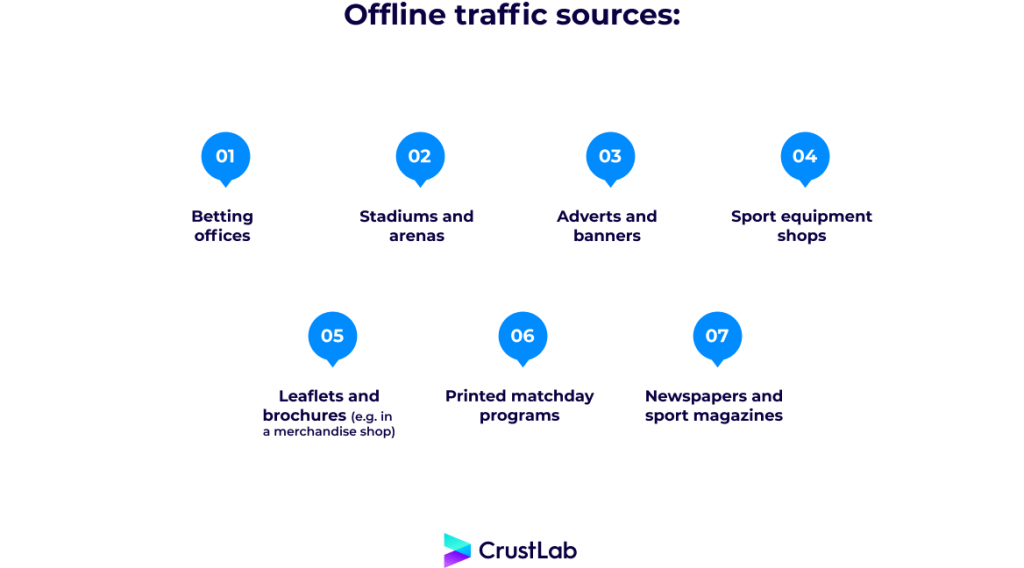
And here’s where to redistribute them:
- Betting offices,
- stadiums and arenas,
- adverts and banners,
- sport equipment shops,
- leaflets and brochures (e.g. in a merchandise shop),
- printed matchday programmes,
- newspapers and sports magazines.
There can be either a promotional code (e.g. START15) or a promotional link (abc.dyz/downloadNOW) to follow, but QR codes are equally popular and can trigger the instant download. Especially now, in the world of 5G and fast connections, scanning a code and downloading an app only takes a jiffy. It is also more convenient to scan a QR code than to manually write out a long link or complicated code.
It’s also worth mentioning AppClips here. What do we mean? From iOS 14 onwards, generating so-called AppClips is enabled. AppClips allow for generating a dedicated code similar to a regular QR code. By scanning it, users can open a part of the mobile app without downloading it on their device. Thanks to that, users can be encouraged to give a particular sportsbook app a try without dedicating too much time or drive space initially. They can browse through leagues, bets, and odds and if they like the interface and functionality of the app, they may decide to download the full version and keep betting.
Of course, using all of those features is also dependent on the actual law and legal restrictions concerning each and every market you wish to enter.
Help center
It’s often forced into code by law but is also considered a helpful asset for thousands of bettors around the world. A help center should consist of:
- How to play? – a kind of a knowledge base to explain the technical mechanisms of placing a bet, paying for it, cashing it out. This may include some basic info (at least for experienced bettors) but will be extremely useful for those who have just started or feel a bit lost in-app.
- Betting rules – what’s allowed and what’s forbidden, long story short. This should also consist of legal restrictions, as well as terms and conditions of the service.
- Bet calculator – if applicable, the calculator should help users easily work out potential winnings or losses.
- Explanation of various bet types – such information should be available to read as a knowledge base article, as well as in the form of mouse hover next to particular bet types once to be placed in-app.
- “Responsible gaming” section with player protection information, self-assessment, and links to support services. Deposit limits, session reminders, and self-exclusion belong here too, and many markets require them. Even if it’s not forced by law, it’s always good to add such a disclaimer in-app.
What Has to Sit Behind the Features
Most of the features above are only as good as the integrations and operations underneath. These examples come from published CrustLab projects:
- Data and odds: Live betting, statistics, and trackers depend on feed quality. For Pick24, CrustLab built a serverless integration layer on the LSports API, including algorithms for European and Chinese handicap calculation (Pick24 case study).
- Third-party services and regional rules: The white-label sportsbook apps built for the US and Canada integrate Kambi, SmartyStreets, and Xtreme Push (push messaging) and work across states (white-label sportsbook case study).
- Identity, CRM, and compliance: The OlyBet app supports Smart ID, mobile ID, and biometric authentication, connects to the operator’s proprietary platform and Optimove CRM, and was delivered in 5 months within a fixed budget (OlyBet case study).
- Store rules and local flows: The KTO hybrid app for Brazil was built around Apple App Store and Google Play requirements and adapted to local KYC and responsible gaming flows (KTO case study).
- Peak traffic: Before the FIFA World Cup 2022, BETFAN needed a new sportsbook UI that could take the traffic without downtime, and CrustLab provided first-level support during the tournament (BETFAN case study).
- Design before build: DreamPicks received a full clickable MVP design, including a custom betslip view, in under three months (DreamPicks case study).
- Pricing and risk: Limits, cashout pricing, and market suspension rely on the trading and risk setup. Read how bookmakers set odds and our guide to sports betting risk management.
Over to you
Does a sportsbook app need every feature on this list? No, but the standard set is the entry ticket, and the differentiators decide which app users keep. Use the list as a checklist when planning your product. CrustLab, an iGaming powerhouse, builds sportsbook frontends, mobile apps, and integrations for operators. Talk to our team about your project.